
Is 90% of Skin Aging Caused by the Sun? The Facts
The often-cited 90% figure refers primarily to visible skin aging, particularly changes on frequently exposed areas such as the face, neck, chest, and hands. While the exact percentage varies by study and individual, ultraviolet radiation is a major cause of wrinkles, uneven pigmentation, rough texture, and reduced elasticity.
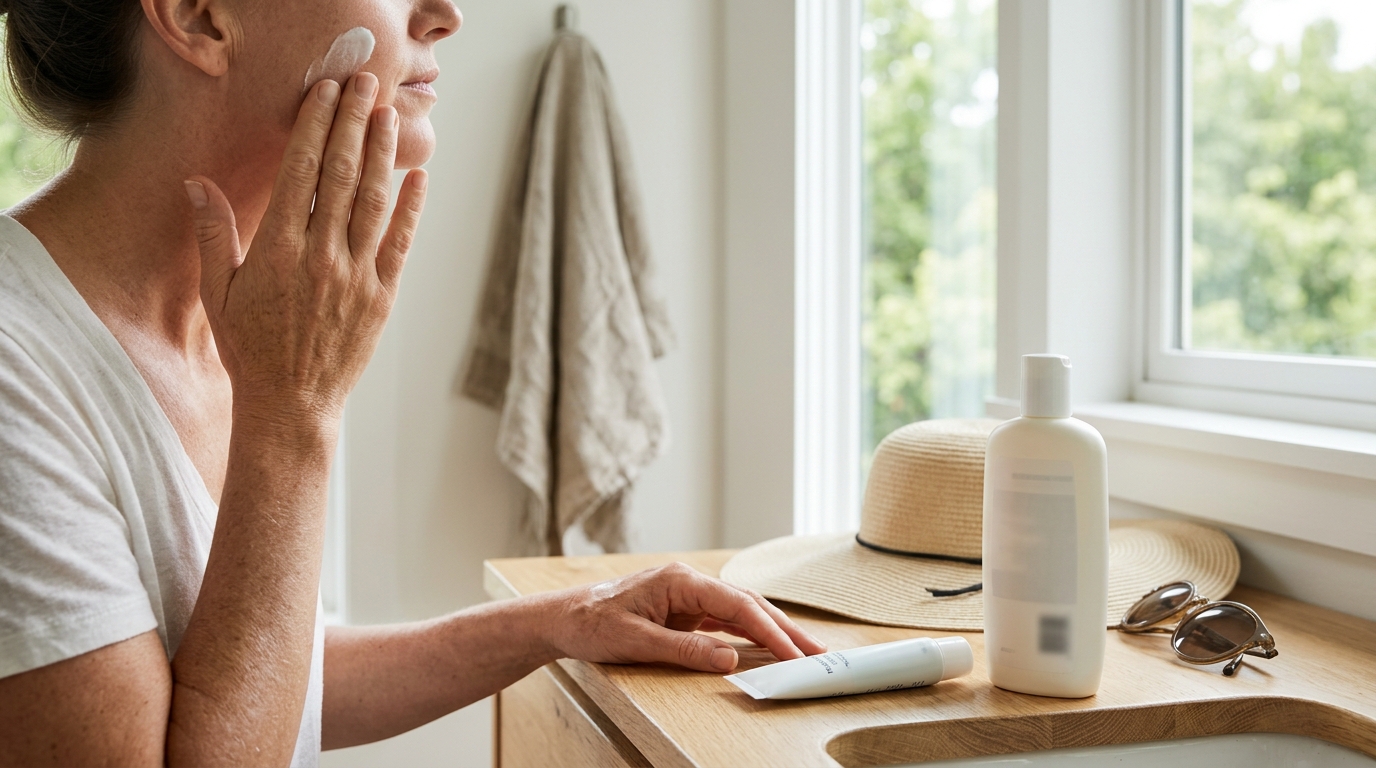
UVA rays penetrate deeply and contribute to collagen and elastin breakdown, while UVB rays primarily cause sunburn and direct DNA damage. Both types can reach skin during everyday activities, so apply broad-spectrum SPF 30 or higher to exposed areas each morning.
Featured in this guide
Sun and Skin Aging: The Ultimate Guide to Protecting and Reversing Sun Damage – Digital Download
Not every age-related change comes from sunlight. Genetics, hormonal shifts, repeated facial movement, smoking, nutrition, sleep, and natural declines in collagen also affect how quickly skin changes over time; compare protected and exposed areas of your skin to see the likely difference.
Use approximately two finger lengths of sunscreen for the face and neck, and reapply every two hours when outdoors or after swimming or sweating. Add UV-protective sunglasses, a wide-brimmed hat, and shade during peak daylight hours for more complete coverage.
Consistent protection can prevent existing discoloration and texture changes from worsening. Retinoids, vitamin C, exfoliating acids, and dermatologist-performed treatments may improve some visible damage, but persistent or changing spots should be examined by a medical professional.
Sun protection works best as a daily habit rather than an occasional response to bright weather. Learn more about prevention, treatment options, and realistic results in the complete guide to sun and skin aging.
Skin aging from sun exposure can often be improved, but it may not be completely reversed. Sunscreen, retinoids, antioxidants, chemical peels, lasers, and other professional treatments can reduce certain spots, fine lines, and texture changes.
Sun exposure is one of the fastest external causes of facial aging, especially when combined with smoking. Poor sleep, chronic stress, pollution, and inadequate skin protection may also accelerate visible changes.
Avoiding excessive sun exposure helps prevent photoaging, but it cannot stop natural aging. Use shade, protective clothing, and broad-spectrum sunscreen rather than relying on complete sun avoidance.
Daily UV protection is among the most effective ways to slow visible skin aging. Not smoking, sleeping adequately, eating a balanced diet, and using evidence-based skincare can provide additional support.
Avoiding excessive sun may help you retain smoother, more evenly toned skin over time. Looking younger also depends on genetics, lifestyle, skincare, and normal age-related changes.
The sun can make your face look older by damaging collagen, elastin, and pigment-producing cells. Repeated unprotected exposure may lead to wrinkles, sagging, dark spots, redness, and a rougher texture.




Leave a comment