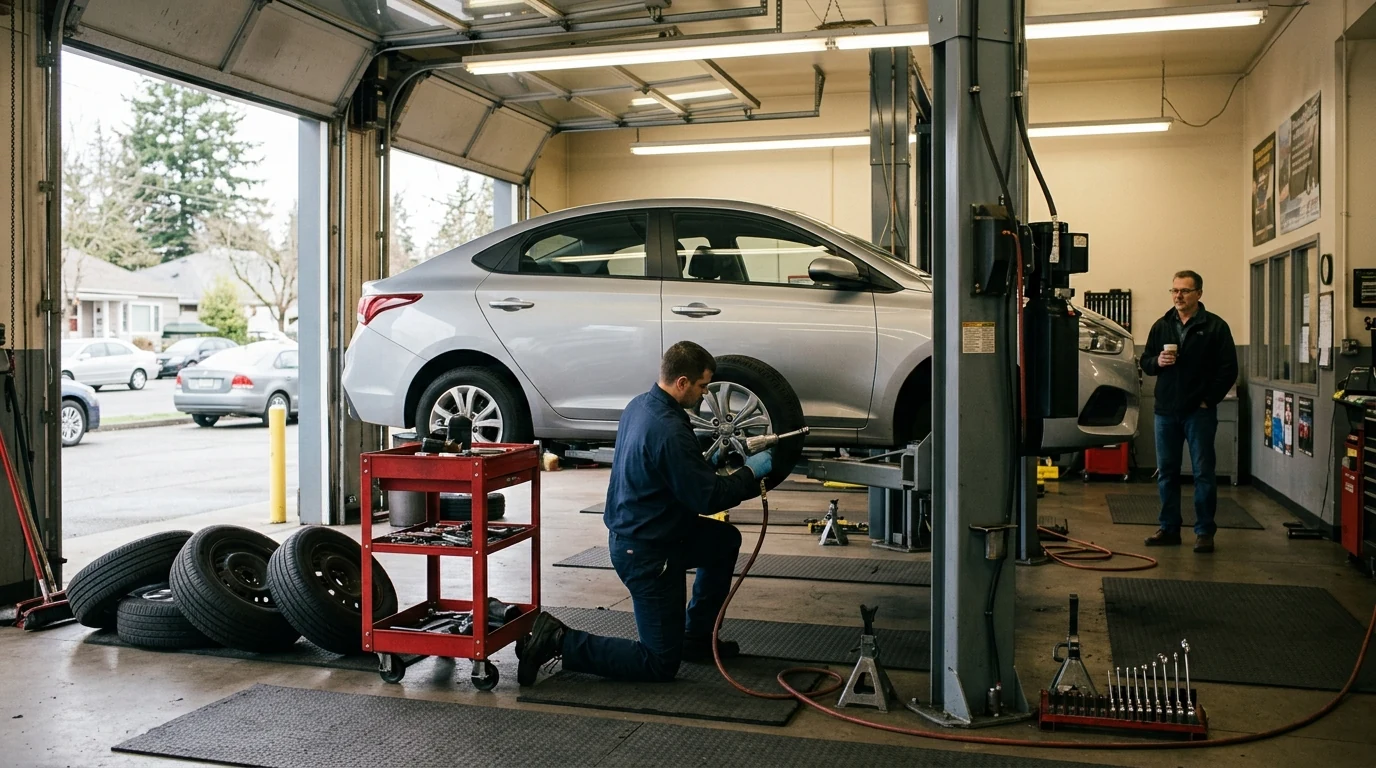
Is a Tire Rotation Necessary? When and Why to Rotate
Yes, tire rotation is generally necessary because tires do not wear at the same rate. Front tires often experience more wear from steering, braking, and engine weight, while driven wheels may wear faster under acceleration. Rotating them helps distribute that wear more evenly.
More uniform tread can improve handling, reduce road noise, and extend the usable life of a full tire set. It may also help preserve warranty coverage when the tire manufacturer requires documented rotations.
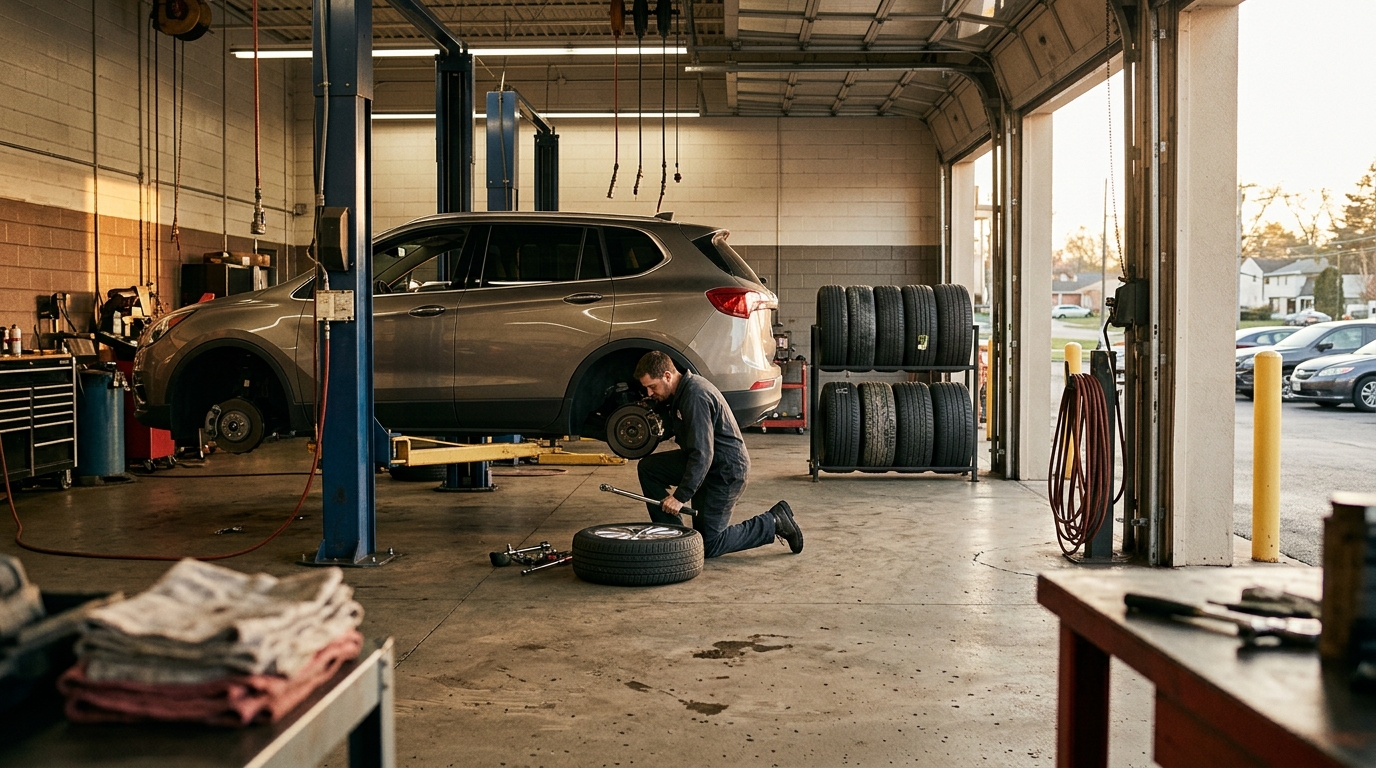
Many manufacturers recommend tire rotation every 5,000 to 7,500 miles, although the correct interval depends on the vehicle, drivetrain, and tire design. Check the owner’s manual and tire warranty rather than relying on one universal schedule.
A convenient approach is to request a rotation during every other oil change or when the vehicle’s maintenance reminder appears. Electric vehicles and high-performance models may need more frequent service because their weight and torque can accelerate tread wear.
Featured in this guide
Why Tire Rotation Matters: A Complete Guide to Tire Maintenance, Safety, and Savings
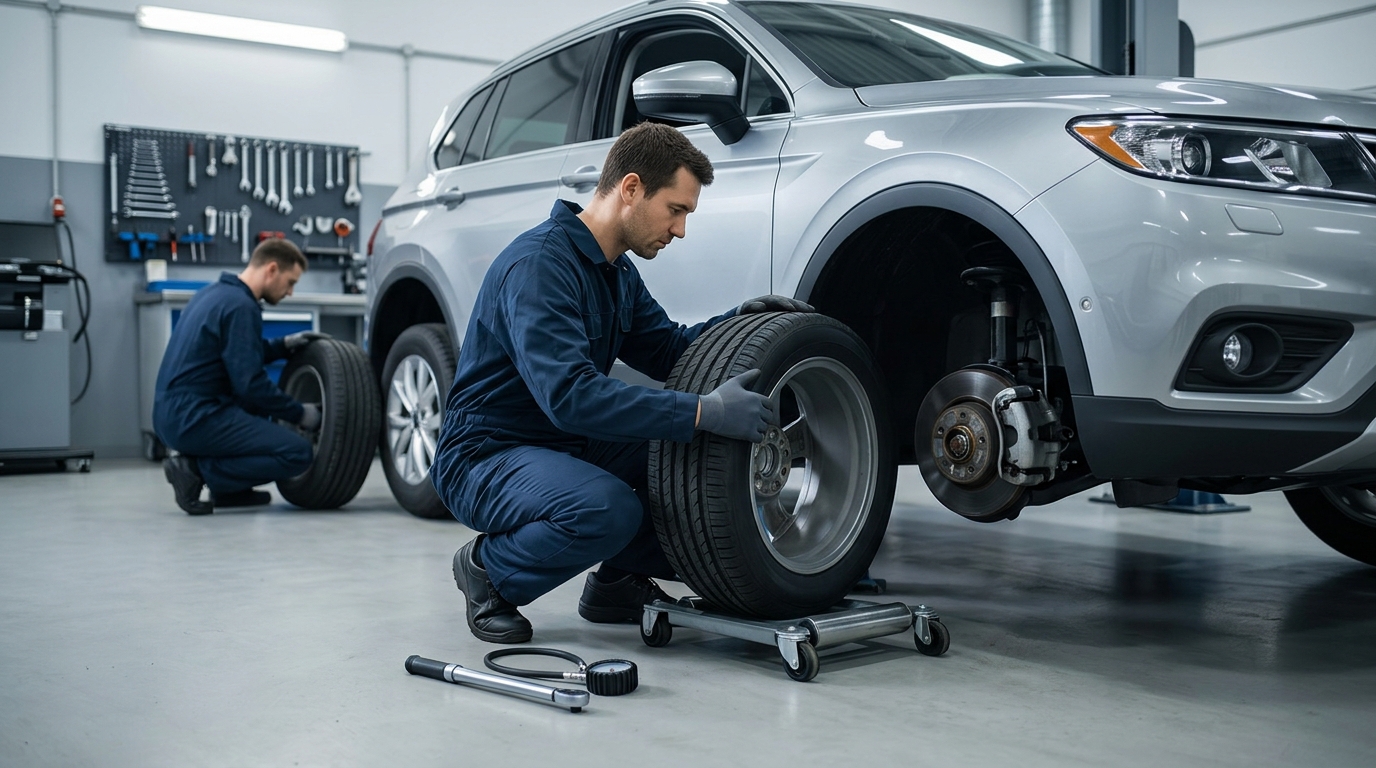
The correct pattern depends on whether the vehicle uses front-, rear-, all-, or four-wheel drive. Directional tires generally move only from front to rear on the same side, while staggered wheel sizes may prevent rotation between axles.
Before moving any wheel, verify tire direction arrows, front and rear sizes, and vehicle-manufacturer instructions. After service, confirm tire pressures and reset the tire-pressure monitoring system if required.
Rotation cannot repair alignment problems, damaged tread, or worn suspension parts. If one edge is wearing rapidly, the steering wheel vibrates, or the vehicle pulls to one side, arrange an inspection instead of simply changing tire positions.
Measure tread depth across the inner, center, and outer sections of each tire. For a fuller explanation of service intervals and exceptions, read is a tire rotation actually necessary?
If you do not perform tire rotation, the tires can develop uneven tread wear, reduced traction, and increased road noise. Skipping tire rotation may also shorten tire life and affect applicable treadwear warranty coverage.
You may need to rotate your tires every 5,000 miles if that interval appears in the vehicle manual or tire warranty. Some vehicles allow longer intervals, but regular tread-depth checks should guide service timing.
Rotating tires at 3,000 miles is usually earlier than necessary, but it generally will not harm them. An early tire rotation may be appropriate when uneven wear is visible or the manufacturer specifies a shorter interval.




Leave a comment